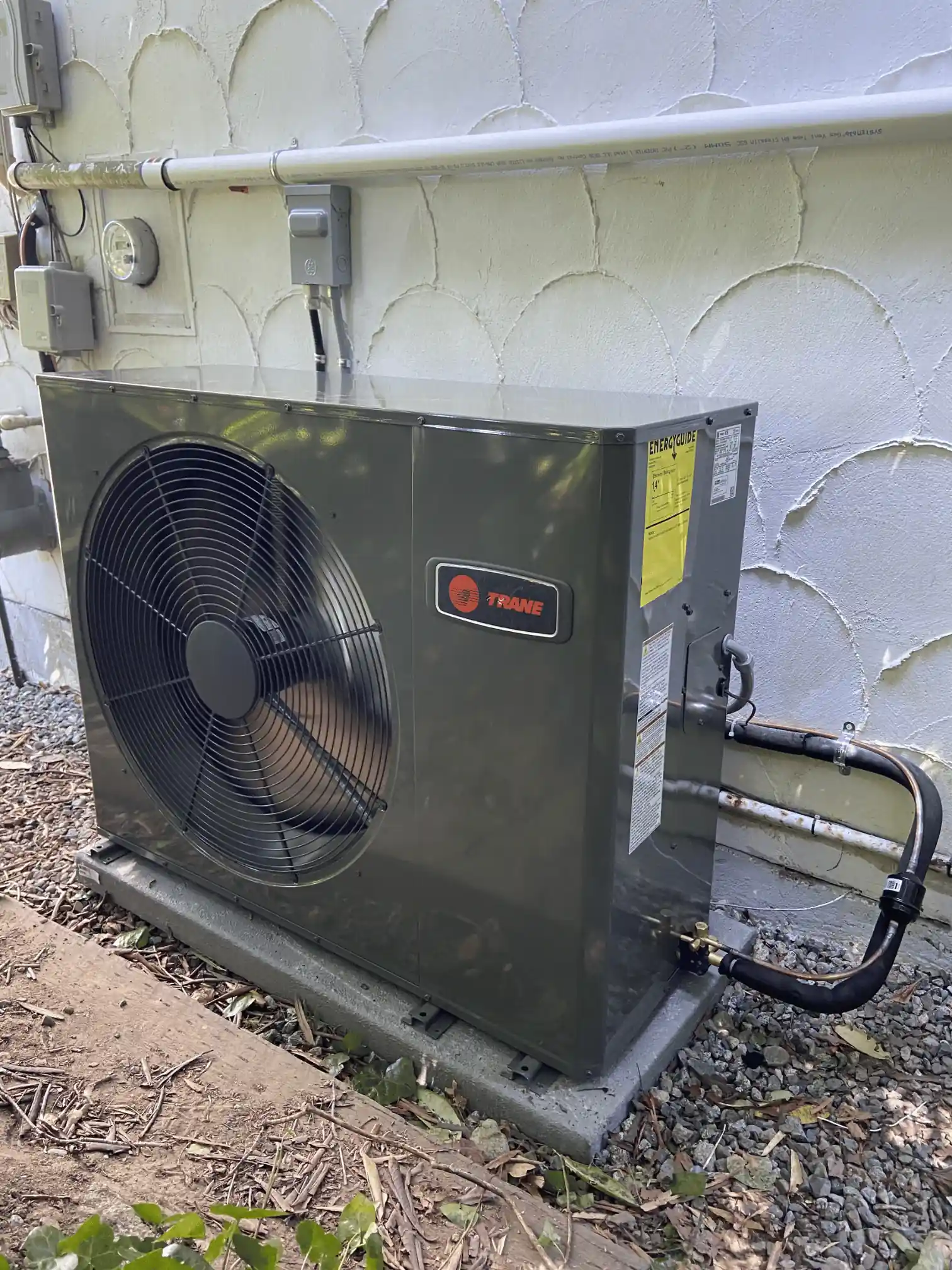
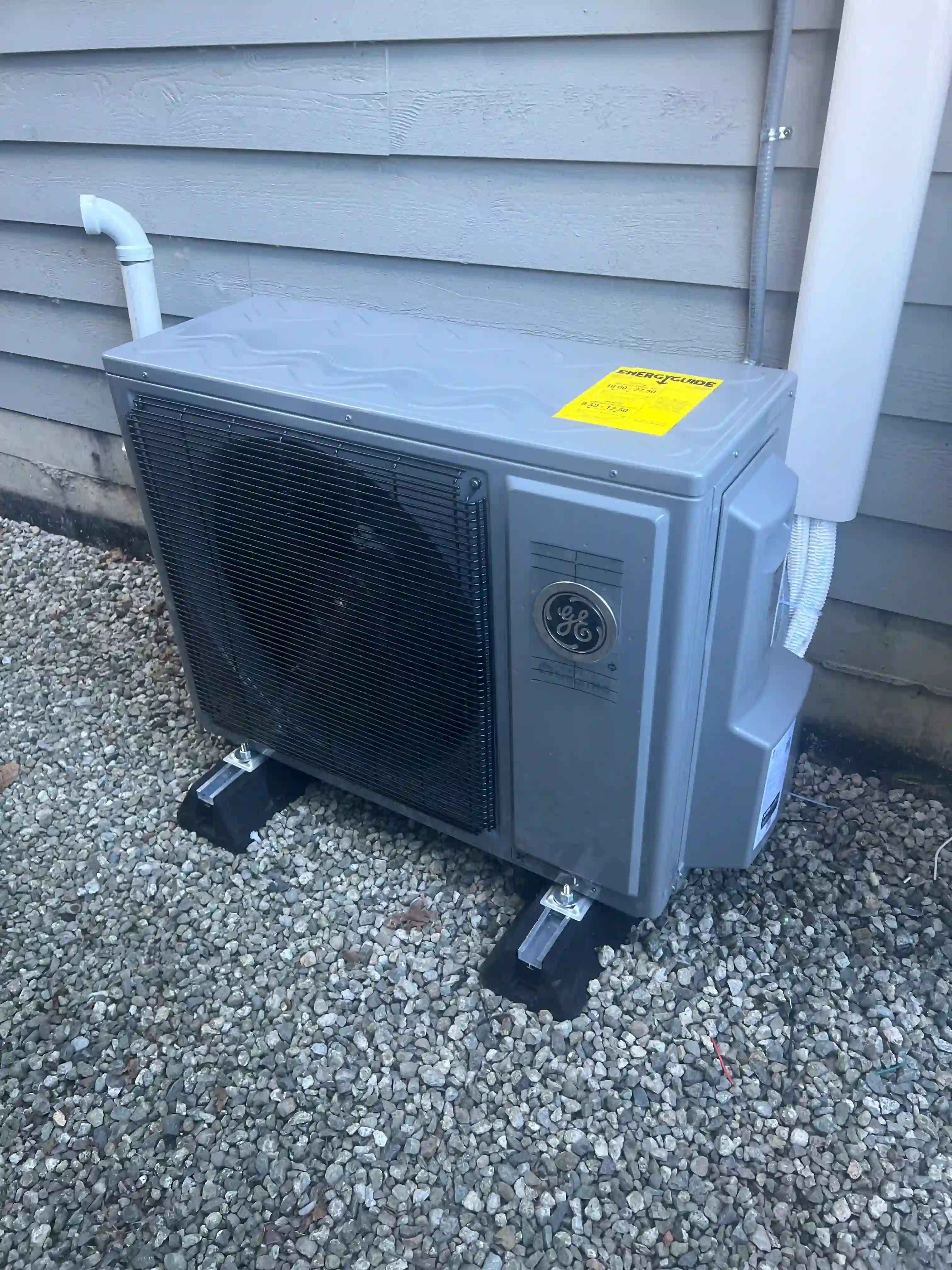
Heat Pump Installation, Langley City and the Township
The best review of a heat pump comes a year after the install, once the system has carried the house through an August heat wave and a January cold snap without the owner thinking about it either time. Langley gives that system more to do than the coastal cities: summers run hotter here and winters colder, so the cooling half and the heating half both get worked, and the savings show up on more of the year's bills. Eaton's Heating installs central heat pumps across Langley City and the Township as an authorized Trane dealer, whether the plan is pairing one with your existing furnace or replacing the heating system outright. The free in-home assessment settles sizing, electrical, and the exact all-in price, current CleanBC and FortisBC rebates included, with zero percent Financeit financing over 12 months available.


See what our customers have to say
Brands Serviced
Years of Experience
Homes Served and Counting
Most heat pump projects in Langley start in homes with a gas furnace already in the mechanical room, ductwork already behind the walls, and a family that has spent one too many July nights with fans in every window. Adding a central heat pump to that setup gets you more for your money than almost any upgrade in the trade: the outdoor unit ties into the existing ducts through a matched indoor coil, and the house gains central cooling it never had while the heat pump takes over most of the winter heating at a fraction of the gas cost. The furnace stays right where it is, as the backup, and in Langley that backup is worth keeping: when outflow cold drops past the changeover point, the furnace picks up automatically and hands back over when the cold snap ends. Heat pump installation configured this way gets its changeover set for Langley's actual lows, not a Metro Vancouver default.
The second path makes the heat pump the main system. In Willoughby and Latimer, more and more new homes run on heat pumps from day one, and across the older neighbourhoods the full-replacement conversation starts whenever a furnace reaches the end of its life anyway: if the furnace replacement money is getting spent regardless, putting it toward a heat pump buys heating and cooling in one move. Modern cold-climate equipment handles Langley winters as a sole heat source, so the choice between keeping a gas backup and going without one is a cost and comfort decision we put real numbers on, not a technical barrier. The rare Langley home without ductwork has its own route: ductless mini-splits deliver heating and cooling room by room with no duct runs at all. Everything else about the project, sizing, placement, electrical, gets settled the same way regardless of path, during the free in-home assessment.
Sizing matters more in Langley than in milder cities, because the same system has to handle cold winters and hot summers both. Our technicians have installed heat pumps across every kind of home the Lower Mainland builds, from tight townhomes to sprawling acreages, and that range of experience is what good sizing comes from: a unit matched to the actual house and to Langley's weather, not to a square-footage rule of thumb. Sized right, the system keeps the house comfortable at both ends of the year without straining. The same visit checks the electrical panel, since a heat pump needs its own circuit: newer Willoughby-era homes almost always have 200-amp service with room to spare, while some older Brookswood, Aldergrove, and Fort Langley panels need an upgrade first, handled by a certified electrician and priced into the estimate rather than discovered later. On acreages, the distance between the panel, the furnace, and a sensible outdoor unit location becomes its own cost on the quote, which is one more reason the assessment walks the property instead of working from photos.
The equipment recommendation follows the path you picked. When the heat pump is the primary system, Trane's variable-speed tier is worth its premium: continuously modulating output means quieter running, steadier temperatures, and peak efficiency across the thousands of hours a primary system logs each year. In a dual-fuel addition, where the furnace covers the extremes, Trane's mid-range and the RunTru and KeepRite value tiers deliver the meaningful savings at a friendlier price, and we say so rather than upselling features a backup-equipped house will barely use. Every outdoor unit ships with its matched indoor coil, sized as a pair, because mismatched halves waste efficiency the spec sheet promised. The company behind the advice checks out on paper too: authorized Trane dealer, Technical Safety BC licence LGA0200006, FortisBC Trade Ally, BBB A+, HPCN registered, WorkSafeBC covered, 500 plus Google reviews at 4.9.
An install runs one to two days, and the step that decides whether the system ever performs as rated comes at the end. We commission for both seasons in one visit: heating mode and cooling mode each get run and verified, the refrigerant charge is set to spec, the defrost behaviour is configured for Langley's frosty nights rather than a factory default, and on dual-fuel systems the changeover temperature gets programmed to the balance point that suits this climate. Factory warranties get registered, the thermostat gets explained in plain language, and the site is left the way we found it, minus the old equipment. One honest note closes every assessment: if the existing system's problem is a $400 part, heat pump repair in Langley is the right page, and we will send you there with the quote to prove it.

Every project follows the same arc regardless of address: we walk the house and the property, the written estimate lands with every cost itemized and the gross and post-rebate numbers side by side, and installation gets booked only after you have both. Electrical permits and inspections are ours to file and schedule in either municipality. Outdoor unit placement gets decided on site, with suburban lots balancing airflow clearance, drainage, and where the neighbours' bedroom windows sit, and acreages balancing line run distances against a spot the mower and the falling leaves will leave alone.
No appliance we install gets more rebate support than a heat pump. CleanBC and FortisBC programs currently put serious money behind qualifying installations, especially where a heat pump displaces fossil fuel heating, and the only catch is that amounts and eligibility change from one program cycle to the next. So the verifying is on us: we confirm what applies to the exact system being quoted, show the price before and after, and file the application as a Trade Ally once the install passes inspection. Financeit's zero percent over 12 months covers whatever the rebates do not.
Licensed Gas Contractor (LGA0200006)
Authorized Dealer and Installer
Certified Fireplace Dealer
Have a question about your HVAC system? Book an appointment using the form below, or call (604) 535-8434 for immediate help.
There are two numbers on every heat pump quote, and the second is the one you pay. The gross: a central heat pump added to a home with existing ductwork and adequate electrical service generally lands between $7,000 and $9,000, while panel upgrades, ductwork corrections, or the long line runs that come with acreage placements push projects into the $9,000 to $12,000 range. The net: CleanBC and FortisBC rebates on qualifying systems meaningfully lower either tier, and the written estimate shows both figures side by side so the decision gets made on the real cost. The assessment behind that estimate is free, and Financeit's zero percent over 12 months is available on every project.
The age of your furnace usually decides it. A healthy mid-life furnace is worth keeping as the backup half of a dual-fuel setup: it costs nothing extra to leave in place, it covers the outflow snaps where running a heat pump gets expensive, and it means a heat pump fault in January is an inconvenience instead of an emergency. A furnace already at the end of its life changes the math, since replacing it and adding cooling separately costs more than letting one heat pump do both jobs. Panel capacity, comfort preferences, and whether you want to keep paying a gas bill all get weighed in the assessment, and we quote the paths you are genuinely torn between rather than deciding for you.
Yes, and the more useful question is what it costs while doing it. Cold weather does not stop a modern heat pump; it reduces the efficiency, so the same heat gets more expensive as the temperature falls. Current cold-climate equipment keeps heating well below anything Langley's winters record, which means the design question is economic: in a dual-fuel home, the thermostat hands off to the furnace at the temperature where gas becomes the cheaper fuel and hands back when the snap breaks, all automatically. In an all-electric home, the answer is a system sized honestly for Langley's real lows, which is what the assessment is for. Either way the house stays warm; the setup just decides which fuel pays for it.
Anywhere it can get airflow, drain properly, and stay out of the way, which means different answers on different lots. On a suburban lot the search balances clearance from fences and walls, a level base with drainage away from the foundation, and courtesy, keeping the unit's hum away from bedroom windows on both sides of the property line. On an acreage the main limit becomes distance: refrigerant lines and the electrical run stretch between the mechanical room, the panel, and the chosen spot, and a location clear of mower debris, leaf fall, and drifting vegetation saves the coil years of buildup. Placement gets decided during the assessment with the homeowner standing there, because moving an outdoor unit later is an expensive project nobody wants twice.
It depends on how big the heat pump's job is. As a primary system running thousands of hours a year across both seasons, variable-speed earns its price every day: continuous modulation holds steadier temperatures, runs quieter than a cycling unit, and gets peak efficiency out of every one of those hours. As the addition in a dual-fuel home, where the furnace absorbs the extremes and the heat pump handles the comfortable middle, a mid-range or value-tier unit captures most of the savings for meaningfully less money, and that is usually what we recommend. The honest rule: the more of the year the heat pump owns, the stronger the case for modulation.
They cost about the same to buy the day you install them, and the difference shows up every month after. A central air conditioner cools; a heat pump cools identically and then spends the rest of the year heating at a lower operating cost than gas for most of the season, which is why rebate programs back heat pumps and largely ignore ACs. With a furnace nearing the end of its run, the heat pump also plans ahead for you: it carries more of the heating load now and leaves you options when the furnace finally goes. The AC still makes sense in homes with a newer furnace and a strict budget, and we quote both when the call is genuinely close.
Simply complete our form to make an appointment. A member of our team will be in touch to confirm your appointment.