Central AC Installation for Coquitlam Homes
Adding central air conditioning to a Coquitlam home is a smaller project than most people expect. The ductwork is already in the walls, the blower is already in the furnace, and the thermostat is already wired. What an AC install actually adds is one outdoor unit, one indoor coil, a refrigerant line between them, and a dedicated electrical circuit. For most homes, the work takes a single day and the household barely notices the disruption. Eaton's Heating is an authorized Trane dealer based in Coquitlam. We offer Trane's full AC lineup alongside RunTru and KeepRite options, and every project starts with a free in-home assessment and a written, all-in price. Financeit at zero percent over 12 months is available.


See what our customers have to say
Brands Serviced
Years of Experience
Homes Served and Counting
The expensive infrastructure behind central air conditioning is ductwork reaching every room, a blower sized to push air through it, and a thermostat controlling the whole thing. Heating already paid for all of that. What an AC installation adds is compact by comparison: a condenser outside, an evaporator coil in the plenum above the furnace, a refrigerant line set through the exterior wall, and a dedicated circuit from the panel. In Coquitlam, where most homes have a gas furnace and full duct runs, the path from no cooling to whole-house cooling is one working day for the majority of projects.
Burke Mountain makes it even simpler. Many builders through the construction boom installed coil-ready furnaces with cooling in mind, so the newest neighbourhoods are often a straightforward add where the plenum is already configured for the coil. Westwood Plateau's homes from the 1990s and early 2000s vary: some were built coil-ready, others need plenum modifications, and the assessment sorts out which. Across the older neighbourhoods, Maillardville, Austin Heights, Central Coquitlam, and Eagle Ridge, the retrofit wave that has been building through hotter summers is where most of our installs happen now. These homes spent decades without cooling, and one by one they are making the switch from portables and window units to a system that cools the whole house without a sound.
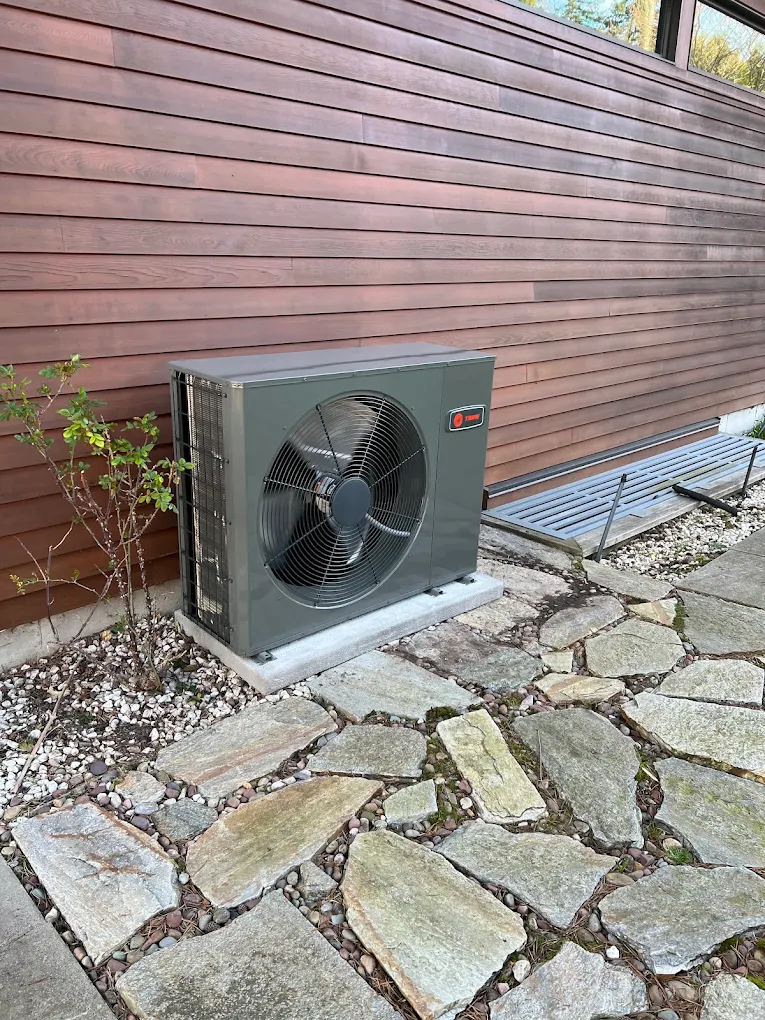
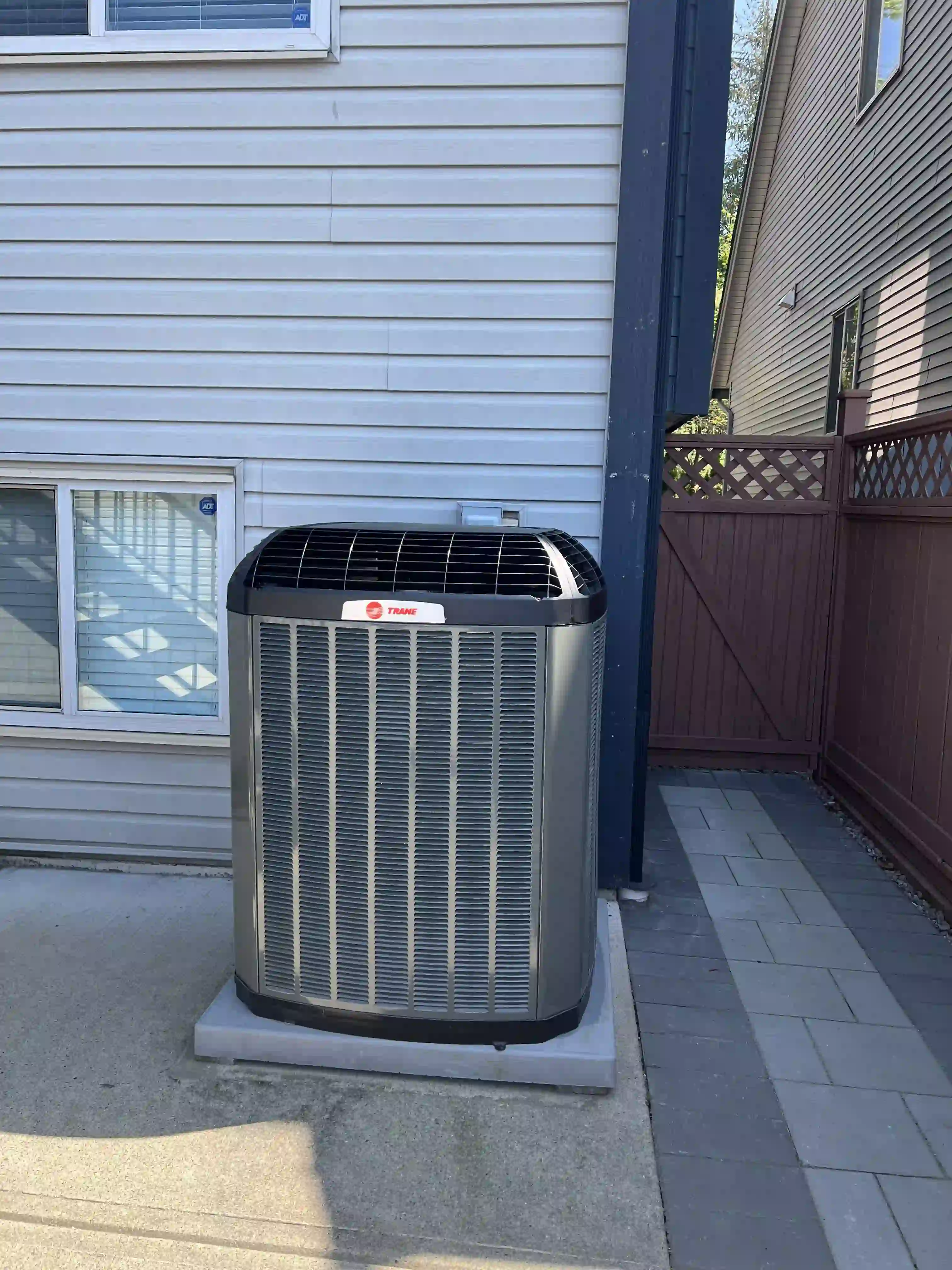
Where the condenser goes matters, and in Coquitlam the range of lot types means every placement is its own conversation. On Burke Mountain's compact townhome lots, fences and neighbouring walls make clearance and noise direction part of the design. On Westwood Plateau and Eagle Ridge, treed hillside lots offer placement flexibility but trade it for longer line runs and debris exposure that the coil will face year after year. In Burquitlam's strata townhomes, the property manager may have rules about where outdoor equipment sits and what it looks like. All of it gets walked, measured, and priced during the free assessment, because moving a condenser after installation is an expensive lesson nobody wants.
The equipment recommendation depends on the house and the lot. Variable-speed condensers run at partial output most of the day, which makes them the quiet answer where the unit sits close to a patio, a bedroom window, or a neighbour's fence, and the efficient answer in larger homes that cool all season. The mid-range tier is where most Coquitlam installs land, balancing performance and price. Compact low-profile condensers fit the narrow side yards common in newer townhome blocks. RunTru and KeepRite cover the projects where budget is the driver. Every outdoor unit ships with its matched indoor coil, sized as a pair, because mismatched halves waste the efficiency the rating promised. Authorized Trane dealer, Technical Safety BC licence LGA0200006, FortisBC Trade Ally, BBB A+, HPCN registered, WorkSafeBC covered, 500-plus Google reviews at 4.9.
Install day is easy on the household. The work lives in three places, the side yard, the furnace room, and the electrical panel, with a single penetration through the exterior wall for the line set and no ductwork opened up. By late afternoon the system is fully commissioned: refrigerant charged to spec, cool air confirmed at the far registers, condensate draining where it should, thermostat programmed, factory warranties registered, and a walkthrough before the crew leaves. If an existing AC system is one part away from another good summer, AC repair in Coquitlam is the cheaper route and we will say so. And if the furnace is old enough to be on borrowed time, a heat pump that heats and cools from one outdoor unit is worth pricing before committing to cooling only. That comparison gets a full airing during the assessment.

Every AC assessment in Coquitlam includes the honest heat pump conversation. An air conditioner cools the house and pairs with your furnace for heating. A heat pump does the same cooling and then spends the rest of the year heating at a lower cost than gas for most of the season. They cost about the same to install, but CleanBC and FortisBC rebate programs back heat pumps and largely ignore cooling-only systems, so the net price on a heat pump can end up lower than the AC. If your furnace is mid-life and healthy, a standalone AC is the simpler, cheaper path. If the furnace is aging and you are going to replace it anyway, the heat pump collapses two projects into one. We quote both options side by side during the same visit so the decision happens on real numbers, not assumptions.
Financeit at zero percent over 12 months is available on every project. Spring is the smart time to book: the schedule is open, equipment is in stock, and the system is broken in before the first heat wave instead of arriving in the middle of one.
Licensed Gas Contractor (LGA0200006)
Authorized Dealer and Installer
Certified Fireplace Dealer
Have a question about your HVAC system? Book an appointment using the form below, or call (604) 535-8434 for immediate help.
$5,000 to $8,000 covers nearly every version of this project, and where a home lands inside that range comes down to three things. The condenser tier is first, from value single-stage up to variable-speed. Distance is second, since a long run between the furnace and the outdoor unit location adds line set and conduit. The electrical panel is third, because an older panel that needs an upgrade before taking the new circuit adds an electrician's scope. The assessment is free, the estimate is written and final, and Financeit at zero percent over 12 months is available.
It means the builder left the door open for cooling. A coil-ready furnace has a plenum arranged to accept an evaporator coil without major sheet metal work, and a blower capable of pushing the airflow cooling demands. That makes the AC add about as simple as this trade gets: coil in, line set out, condenser placed, circuit run, commission, done in a day. Many Burke Mountain and newer Burquitlam homes were built this way even where the owners never knew it. A furnace that is not coil-ready does not close the door, it just adds fabrication work to the plenum, and the assessment tells you which situation you have before anything is priced.
Quieter than most people expect, if two choices get made well. The first is tier: a variable-speed condenser spends most of its life at partial output, which sounds like a low hum from a few steps away, while single-stage units are either off or running at full output with nothing in between. The second is placement: pointing the unit away from patios and bedroom windows, yours and the neighbours', costs nothing at install time and everything to fix later. On Burke Mountain's close lots and in Burquitlam's strata complexes we treat noise direction as part of the design. If evenings on the deck matter, say so at the assessment and the recommendation will reflect it.
Almost nothing, and the one change is positive. The evaporator coil sits in the supply plenum above the furnace, where it has no effect on burners, venting, or heating operation. What does change is how much the blower runs, since it now works summers as well as winters, which makes changing the filter on schedule year-round more important. Your thermostat either already handles cooling or gets swapped for one that does as part of the install.
Your to-do list is short: clear access to the furnace room, the electrical panel, and the side of the house where the condenser will sit, and have someone home. The crew arrives in the morning and works in those three places, with one drilled penetration through the exterior wall and no ductwork opened, so the disruption stays minimal. Power and heating stay on apart from brief, announced interruptions for the electrical tie-in. By late afternoon the system is charged, tested, and explained, the packaging leaves with us, and the first cool evening is yours.
The portable question comes up a lot and the answer is straightforward. A portable cools one room, loudly, while pulling warm air in through the exhaust hose gap in the window. A central system holds the entire house at the temperature you set, silently enough to forget it is running, while stripping the humidity that makes hot nights miserable. Two or three decent portables plus their electricity draw add up fast against equipment that lasts fifteen years, cools every room, and reads as a feature when the house sells. Portables still make sense for a rental or a single stubborn room. As the plan for a house you own, central air is the better investment.
Simply complete our form to make an appointment. A member of our team will be in touch to confirm your appointment.