TSBC Licensed, Boiler Repair, New Westminster
Eaton's Heating repairs boilers of every age across New Westminster, from the cast-iron units under Queen's Park houses to the wall-hung combis in Queensborough townhomes. If the boiler will not fire, the radiators are cold while it runs, the pressure gauge has dropped, the pilot has gone out, an error code will not clear, or a combi has stopped making hot water, call us. Our $189 diagnostic finds the fault, and every repair is quoted before the work starts. We service every residential brand with OEM, CSA certified parts and six months of warranty on parts and labour. Same-day service available.


See what our customers have to say
Brands Serviced
Years of Experience
Homes Served and Counting
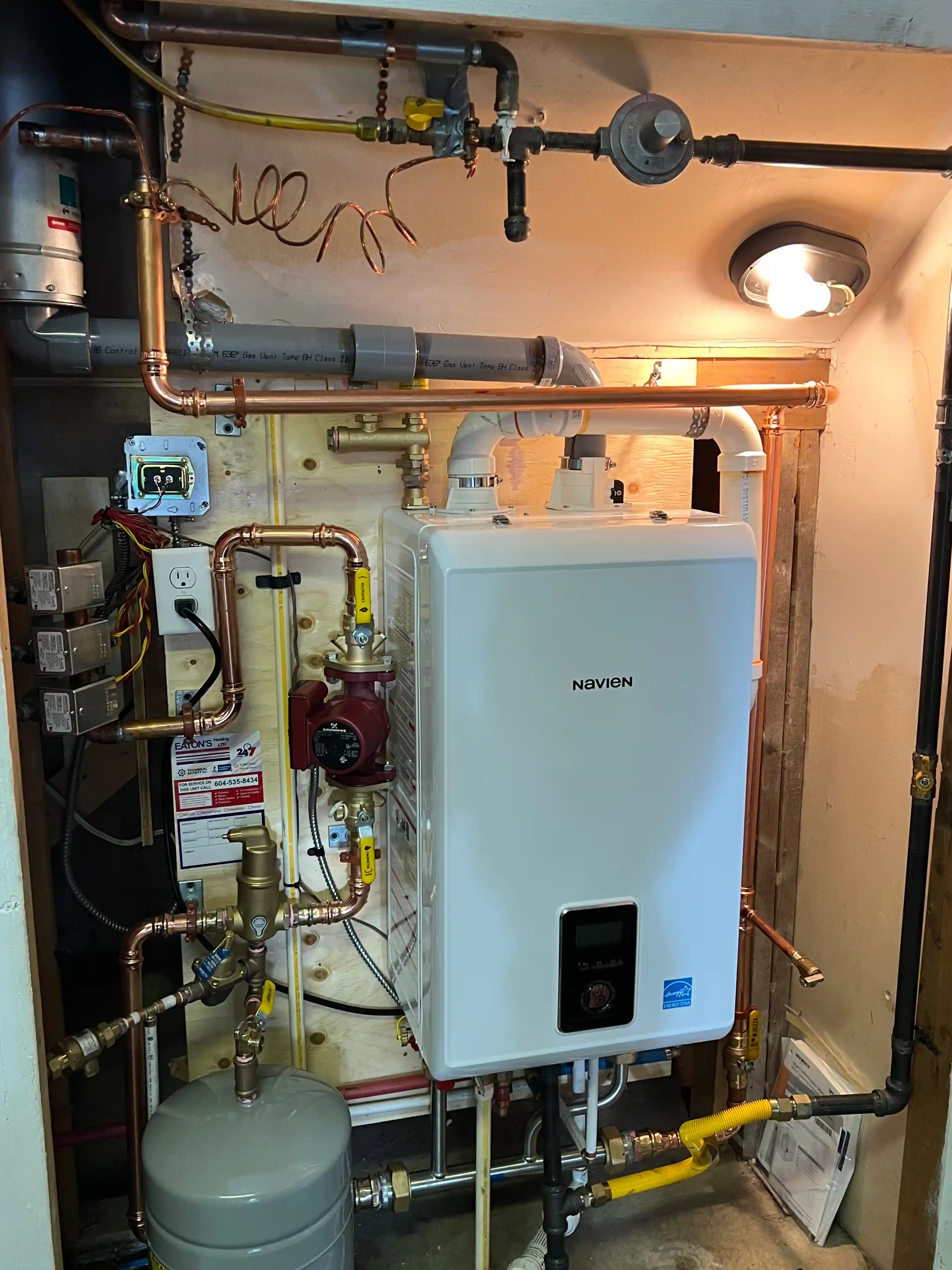
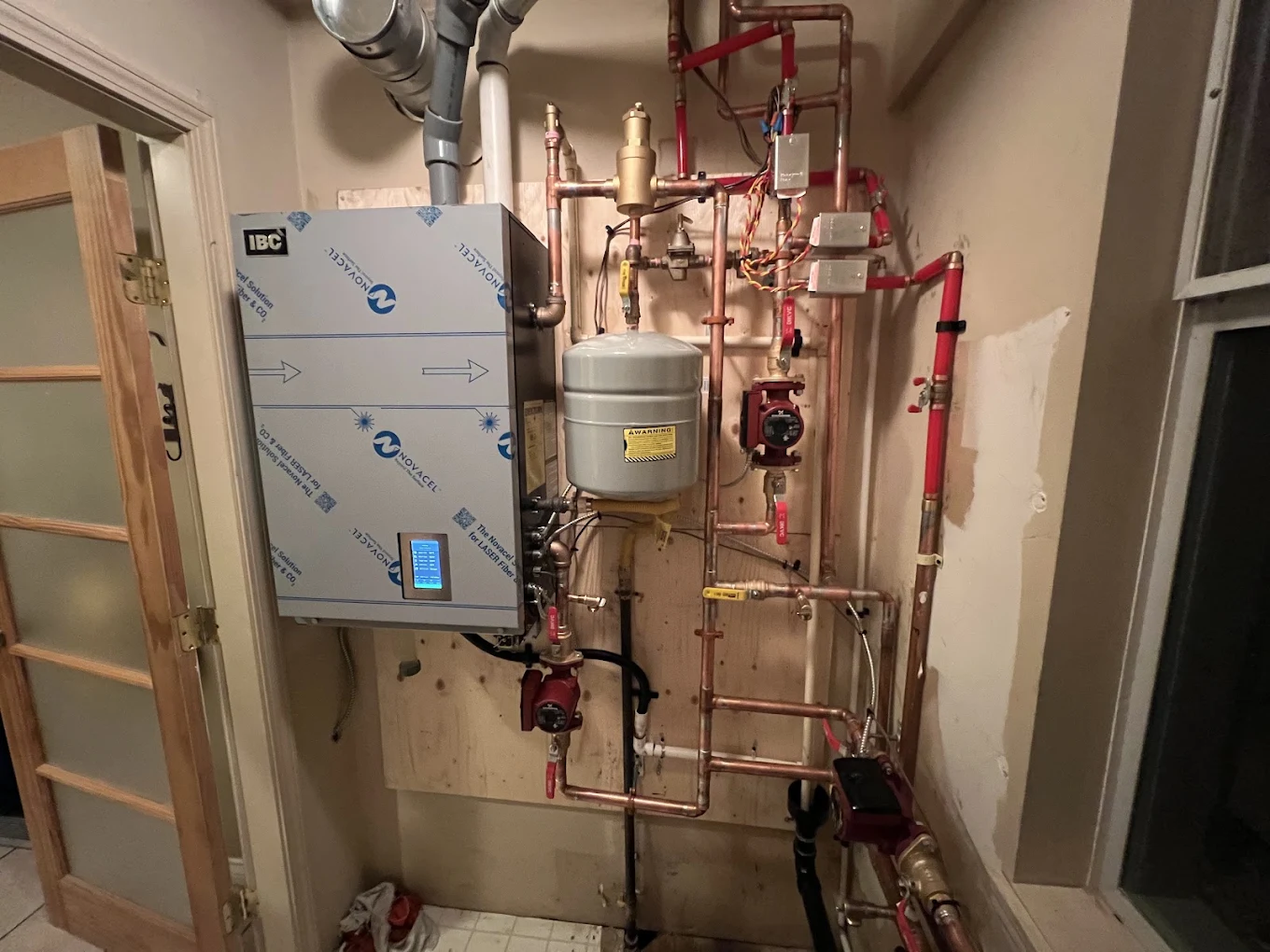
A boiler can fail on the firing side, on the water side, or, on a combi, on the tap-water side, and the diagnostic covers all of them. On the firing side, a modern boiler has an igniter, a flame sensor, and a control board that stops the burner and shows a code when something is off, while an older cast-iron boiler has a standing pilot and a thermocouple, the small probe that holds the gas valve open while the pilot burns. On the water side, a circulator pump moves the heated water out to the radiators, zone valves open and close the loops to different floors, an expansion tank absorbs the water's expansion as it heats, and a fill valve keeps the system at pressure. A combi boiler, which heats the house and the taps from one unit, adds the tap-water side: a flow sensor and a diverter valve that switch the boiler over when you open a faucet, and a plate heat exchanger that heats the tap water. Our boiler repair technician tests the side that matches your symptom first, tells you the part, and quotes the repair before doing it.
In a three-storey house in Queen's Park or Sapperton, the radiators on the top floor are the highest point in the system, and they are the first to show a problem that started somewhere else in it. Air that gets into the water rises and collects there, so a bedroom radiator that is warm at the bottom and cold at the top usually has air trapped in it, and the fix is finding where the air is getting in and stopping it, with an automatic air vent on the boiler if it keeps happening. A circulator pump that is failing moves enough water to warm the main floor and not enough to reach the top, so the upstairs goes cold while the living room is fine. A system that has lost pressure through a leaking valve or a failed expansion tank drops the top-floor radiators first, because that is where the water stops reaching first. All of those are repairs on the system side, and each is a smaller job than the symptom suggests.
New Westminster has more original radiator systems than almost anywhere in the region. Queen's Park and Brow of the Hill are full of Victorian and Edwardian houses whose cast-iron radiators have outlasted three or four boilers, and listings there still advertise a new boiler with the original radiators as a feature. Sapperton and Glenbrooke North have the same setup in fewer houses, often with tubing added in a renovated basement floor. At the other end of the city, Queensborough, Victoria Hill, and Fraserview townhomes run wall-hung combi boilers from the 2000s and 2010s that heat the home and the taps together. We repair both kinds as part of our New Westminster HVAC services. Eaton's Heating is TSBC licensed (LGA0200006), a Home Performance Contractor Network member, and holds a 4.9 rating across 400-plus Google reviews.
Almost every boiler fault is a repair, and that includes a cast-iron boiler from the 1980s. Circulators, zone valves, thermocouples, gas valves, expansion tanks, fill valves, igniters, flame sensors, and combi plate heat exchangers are all parts we replace, and a boiler with one of them new has years of service ahead. The fault that means a new boiler is a leak from the main heat exchanger, the sealed section that carries the water through the flame, because that section is the boiler itself. When we find one, we shut the unit down for your safety and walk you through boiler installation in New Westminster, including keeping your existing radiators. Everything else is a repair, and the technician tells you which before any work starts.

Many of the cast-iron boilers under New Westminster's older houses still run on a standing pilot, a small flame that burns all the time and lights the main burner when the thermostat calls for heat. The thermocouple sits in that flame and generates a tiny current that holds the gas valve open. When the thermocouple wears out, the current drops, the valve closes, and the pilot goes out, usually for no reason you can see. You can relight it and it will stay lit for a day or a week, then go out again. That pattern points to the thermocouple. It is a small part, it is carried on the truck, and replacing it is one of the shortest repairs we do.
A pilot that goes out on windy days or when the basement door is left open is a different problem, and so is one that will not stay lit at all after a new thermocouple. The first points to a draft reaching the pilot through the boiler's air openings or the flue. The second points to the pilot assembly itself, which can clog, or to the gas valve. Which of those it is comes out of the diagnostic, and the repair is quoted before it starts. If your boiler has electronic ignition instead of a pilot, the same symptom points to the igniter or the flame sensor, and those are on the truck too.
Licensed Gas Contractor (LGA0200006)
Authorized Dealer and Installer
Certified Fireplace Dealer
Have a question about your HVAC system? Book an appointment using the form below, or call (604) 535-8434 for immediate help.
Air in the top-floor radiators, a circulator pump that is failing, or a system that has lost pressure. Air is the most common in the older Queen's Park and Sapperton houses, and the repair is finding where the air is getting in, often at a valve packing or a vent that has failed. Pressure and pump problems show on the gauge and at the pump, and the diagnostic covers all three. A zone valve stuck closed does the same thing on a house with separate loops for each floor.
Water has left the system. On a boiler that is sealed and sound, the pressure stays where it was set for years, so a gauge that has dropped means the water went somewhere: a failed expansion tank, which is the small cylinder near the boiler that should be half air and half water, a fill valve that has stopped holding, or a slow leak at a radiator valve or a fitting. Each is a repair. Topping the system up over and over is not a fix, because every top-up brings in fresh water and oxygen that rust an older boiler from the inside, so the sooner the leak is found the better.
On a combi, a separate small heat exchanger warms the tap water, and it depends on a flow sensor to tell the boiler a tap is open and a diverter valve to send the heat that way. Hot water that starts and quits points to one of those two, or to scale in the plate heat exchanger on a unit that has never been descaled. All three are repairs. The plate heat exchanger is a normal replacement part on Navien and Viessmann combis, and descaling is quoted as its own item.
Usually, yes. A cast-iron boiler from the 1990s with a failed thermocouple or circulator is a repair that costs a small fraction of a replacement, and those boilers were built to run for decades. The technician tells you the repair price first. If the boiler is also short-cycling, rusting at the base, or has a leak from the main heat exchanger, that is when a new boiler makes sense, and the quote for that comes from a free in-home assessment rather than a guess made on the day of the repair.
Rarely, but it is worth a diagnostic. A rumble as the burner lights on an older boiler is often scale on the inside of the heat exchanger or air trapped in the system, and both are repairs. A whine or grinding from near the boiler is the circulator pump bearing. A pop at ignition, where the burner lights a second late, is delayed ignition and should be looked at, because it points to the pilot, the igniter, or the gas pressure. Tell us when the noise happens and what it sounds like when you call.
Yes. The boiler, the circulator, the zone valves, and the mixing valve that lowers the water temperature for the tubing in the floor are all part of what we repair. In-floor systems that never warm up usually have a mixing valve that has stuck, a pump that has failed, or air in the loop, and the diagnostic covers all of it. What we do not do is open the floor; a leak in the tubing itself is a flooring job, and we will tell you if that is what we find.
Simply complete our form to make an appointment. A member of our team will be in touch to confirm your appointment.