Central Air Conditioning for North Shore Homes
Summers across the Lower Mainland now routinely push into the 30s, and North Vancouver homes at elevation that used to stay cool find that afternoon sun on a south-facing hillside heats up faster than expected when the breeze stops. Eaton's Heating installs central air conditioning across all North Vancouver neighbourhoods. We are an authorized Trane dealer and pair the outdoor condenser with a matched indoor coil on your existing furnace for whole-home cooling through your ductwork. Free written estimates and flexible financing through Financeit with zero percent interest over 12 months.


See what our customers have to say
Brands Serviced
Years of Experience
Homes Served and Counting
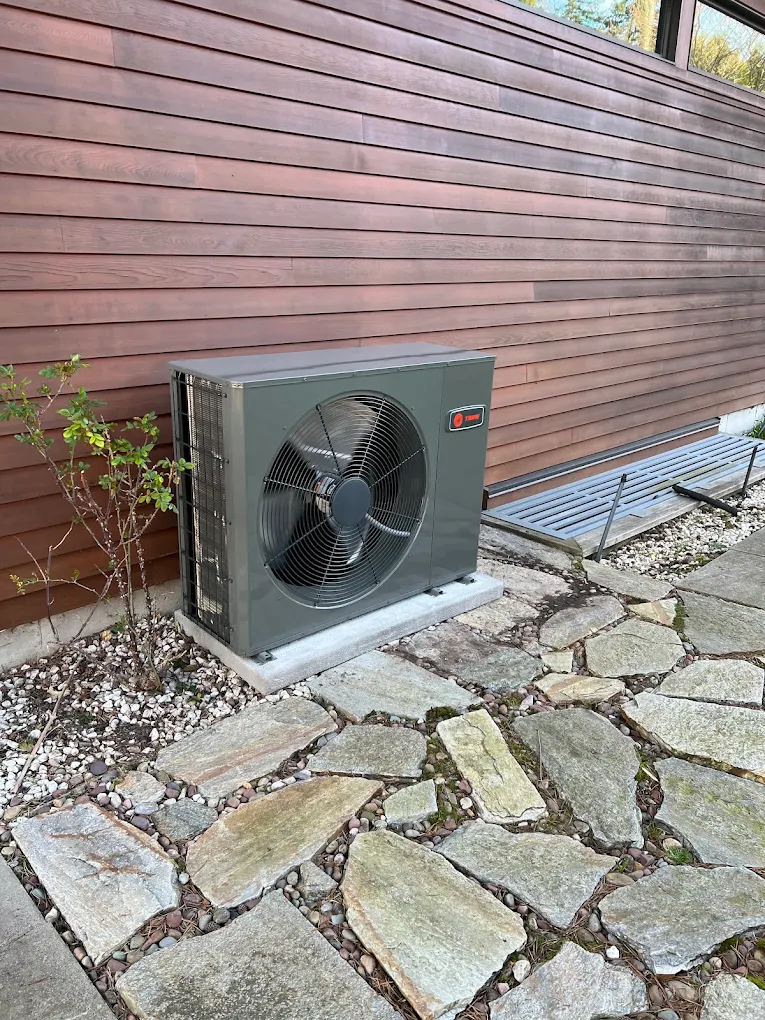
The majority of AC installations we perform on the North Shore are first-time additions to homes that have never had cooling, which is a different project profile than replacing an old unit. A first-time installation means there is no existing outdoor pad, no refrigerant line penetration through the exterior wall, no indoor evaporator coil on the furnace, and no dedicated electrical circuit at the panel. All of these need to be created from scratch. In established neighbourhoods like Lynn Valley, Delbrook, and Capilano, the outdoor unit location must be planned around mature landscaping, fencing, and hillside grade changes that do not exist on a flat suburban lot. In Norgate and Lower Lonsdale, where homes sit on smaller lots with neighbours in close proximity, condenser noise and placement relative to property lines and bedrooms become part of the conversation. We evaluate all of this during the free assessment so the quote reflects the actual scope, not a generic estimate.
Correct sizing is the difference between an AC system that performs and one that disappoints. North Vancouver's cooling profile is less intense than Surrey's or Burnaby's urban corridors, but the variation within the city is significant. A Lower Lonsdale townhome at sea level absorbs more urban heat than a tree-shaded Lynn Valley split-level at 200 metres, and both have different cooling loads than a south-facing Edgemont home with large windows and afternoon sun exposure that the mountain behind it does nothing to block. We size every system to the home's actual cooling requirements, accounting for square footage, insulation, window area and orientation, ceiling height, duct capacity, and the home's specific solar exposure. The indoor evaporator coil is matched to the outdoor condenser so both operate at their rated efficiency. Oversizing produces short cycling and poor humidity control. Undersizing leaves the upstairs warm on the hottest afternoons.
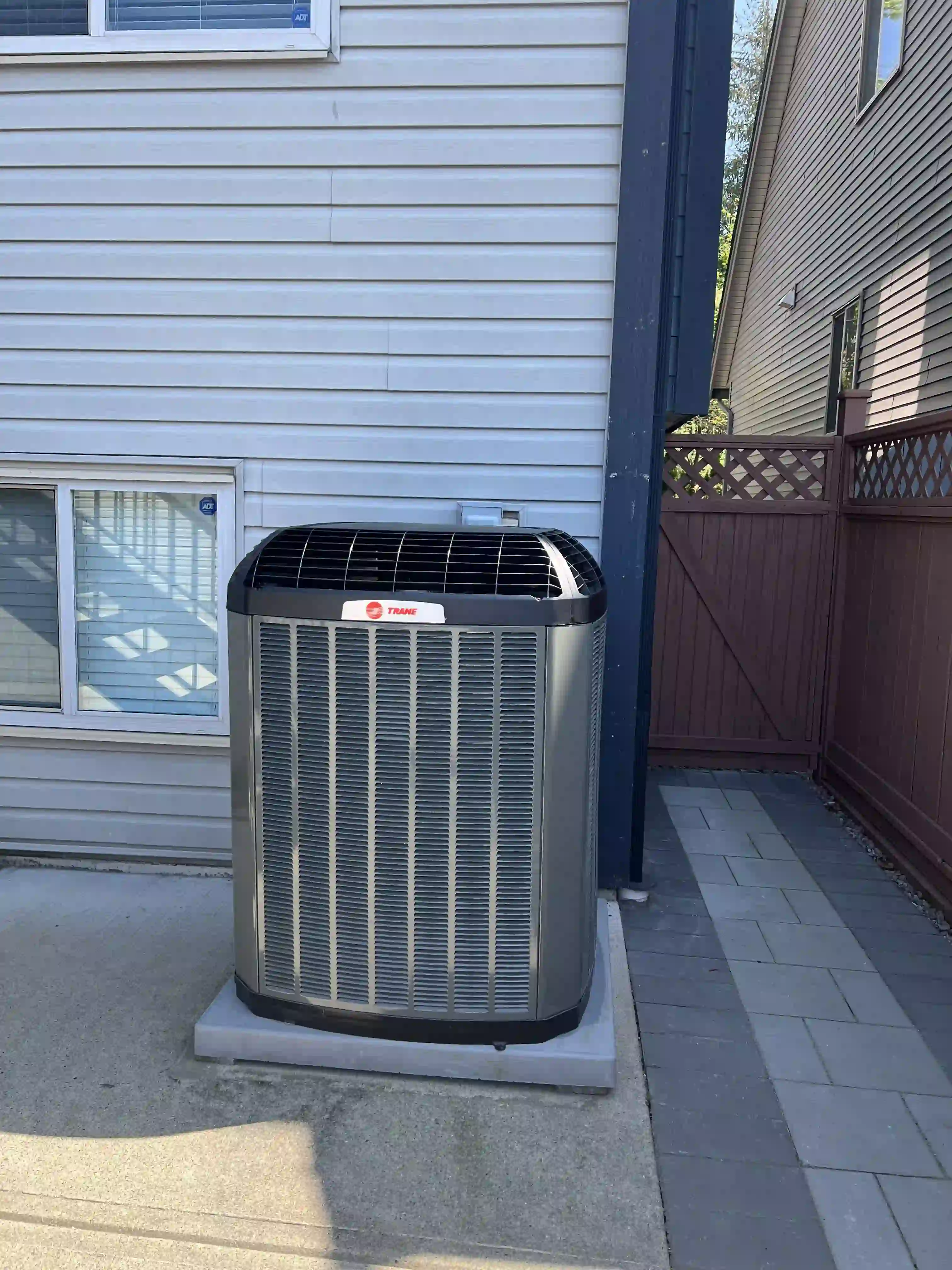
Eaton's Heating is the only authorized Trane dealer in Coquitlam, and we install Trane's full central AC lineup across the North Shore. Trane's variable-speed air conditioners deliver the highest SEER ratings and quietest operation for homeowners who want premium cooling performance. Their mid-range options balance efficiency and value for the majority of installations. For tight-clearance situations common to North Vancouver's older side yards and narrow setbacks, compact low-profile condensers fit where a standard unit cannot. We also install KeepRite and RunTru air conditioners for budget-conscious projects. Every condenser is paired with a matched indoor coil sized for peak efficiency.
Installations done right from the start do not generate callbacks. Eaton's Heating is Technical Safety BC licensed under LGA0200006, holds FortisBC Trade Ally status and BBB A+ accreditation, and is Home Performance Contractor Network (HPCN) registered. Our team carries full WorkSafeBC coverage. Our 400+ five-star Google reviews and 4.9 average rating reflect first-time installations that cool evenly, drain properly, and run quietly from the first day forward.
For a first-time North Shore installation, the project begins with preparing the outdoor site: levelling and positioning the condenser pad on what may be a sloped lot, establishing proper clearance and drainage, and routing the refrigerant line set and electrical conduit through the exterior wall to the furnace location. Inside, we mount the evaporator coil on the furnace air handler, connect condensate drainage, and wire a dedicated circuit from the electrical panel. All electrical work is completed by a certified electrician. Once connected, we charge the system to manufacturer specifications, verify cooling output and airflow through the duct system, program the thermostat, and register factory warranties. We walk you through operation before leaving. Most first-time installations on the North Shore are completed in one day, with projects requiring panel upgrades or complex outdoor site work occasionally extending to a second day. If your existing AC needs repair rather than replacement, we provide honest guidance. For homeowners who want heating and cooling from one outdoor unit, a heat pump may be worth comparing. We also install furnaces across the North Shore.

Outdoor unit placement on the North Shore takes more planning than on flat lots in other cities. A condenser sitting on a Lynn Valley hillside needs a level pad even when the ground slopes, drainage routing that prevents rainwater from pooling around the base, and clearance from retaining walls, fences, and mature trees that could restrict airflow or drop debris onto the unit. In Deep Cove and the Dollarton area, heavily treed properties need the condenser positioned where leaves and needles will not continuously foul the coil. In Upper Lonsdale and Edgemont, proximity to neighbouring homes means considering noise direction. We assess each property during the free estimate and include all site preparation in the quoted price.
North Vancouver homeowners deciding between a standalone AC and a heat pump should consider whether they also want to reduce gas heating costs and qualify for CleanBC rebates. An AC handles cooling only and costs less upfront. A heat pump provides cooling plus efficient heating for most of the year and may qualify for provincial incentives that narrow the price gap. The right choice depends on the home's heating situation and the homeowner's priorities. We present both options with full pricing during the assessment. Visit our rebates page for current programs. For all HVAC services across North Vancouver, Eaton's Heating covers every category on the North Shore.
Licensed Gas Contractor (LGA0200006)
Authorized Dealer and Installer
Certified Fireplace Dealer
Have a question about your HVAC system? Book an appointment using the form below, or call (604) 535-8434 for immediate help.
First-time AC installations on the North Shore, where no prior cooling infrastructure exists, typically run $5,000 to $8,000 depending on the condenser efficiency tier, the length of the refrigerant line run, and whether the electrical panel needs upgrading. Homes on hillside lots where outdoor unit placement requires additional site preparation sit toward the higher end. Straightforward installations on level properties with modern electrical panels and short line set runs fall toward the lower end. We provide free written estimates that itemize every cost so the quoted number is the final number. Financing through Financeit with zero percent interest over 12 months.
It depends on your home's elevation, orientation, and how you experienced recent summers. Homes at higher elevations with tree cover and north-facing exposure may still manage without AC most of the time. But south-facing homes in Edgemont, Upper Lonsdale, and Canyon Heights that catch direct afternoon sun through large windows can reach uncomfortable temperatures during the multi-day heat events that now occur every summer. Lower-elevation homes in Lower Lonsdale and Norgate experience temperatures closer to Vancouver's and increasingly benefit from cooling. If you found yourself buying portable ACs or window units during recent heat waves, a central system provides dramatically better cooling, quieter operation, and proper dehumidification. We assess your home's actual cooling load during the free estimate and give you an honest recommendation.
Modern condensers are significantly quieter than units from a decade ago. Variable-speed models, which run at lower output most of the time, operate at roughly 55 to 65 decibels, comparable to a normal conversation. Standard single-stage units are louder during operation, typically 70 to 75 decibels, but cycle off once the home reaches temperature. On the North Shore, where lots are often smaller than suburban Surrey and homes sit closer together, condenser placement relative to your neighbour's bedroom windows is a legitimate consideration. We factor noise direction into our site planning during the assessment and can recommend quieter variable-speed options where noise sensitivity is a concern.
The outdoor equipment looks similar and the installation process is comparable, but the two systems serve different purposes. An AC provides cooling only and pairs with your existing furnace, which continues handling all heating. A heat pump provides both cooling and heating from the outdoor unit, reducing your furnace to a backup role during the coldest days. The heat pump costs more upfront but may qualify for CleanBC and FortisBC rebates that standalone AC does not, and it reduces gas consumption across the heating season. For North Vancouver homes where the furnace is in good condition and the homeowner's primary goal is adding cooling, a standalone AC is the more straightforward and affordable path. For homes where the furnace is aging and the homeowner wants to address heating efficiency at the same time, a heat pump handles both in one project.
Yes. A central AC condenser requires a dedicated electrical circuit, and many North Vancouver homes built before the 1980s have 100-amp panels that may not have capacity for the additional load. We assess panel capacity during the free in-home estimate. If an upgrade from 100 to 200 amps is needed, we include that cost in the written estimate and coordinate the work with a certified electrician as part of the installation project. Homes built or renovated after the 1990s in areas like Blueridge, Grouse Woods, and newer Lonsdale corridor developments typically have 200-amp panels with available capacity for the new circuit.
Most first-time installations are completed in a single day. The project includes outdoor site preparation, condenser placement, refrigerant line set and electrical routing through the exterior wall, indoor coil installation on the furnace, condensate drainage setup, system charging, airflow verification, and thermostat programming. Projects that require an electrical panel upgrade or complex outdoor site work on a hillside lot may extend to a second day. We confirm the expected timeline during the assessment so you can plan around it.
Simply complete our form to make an appointment. A member of our team will be in touch to confirm your appointment.