
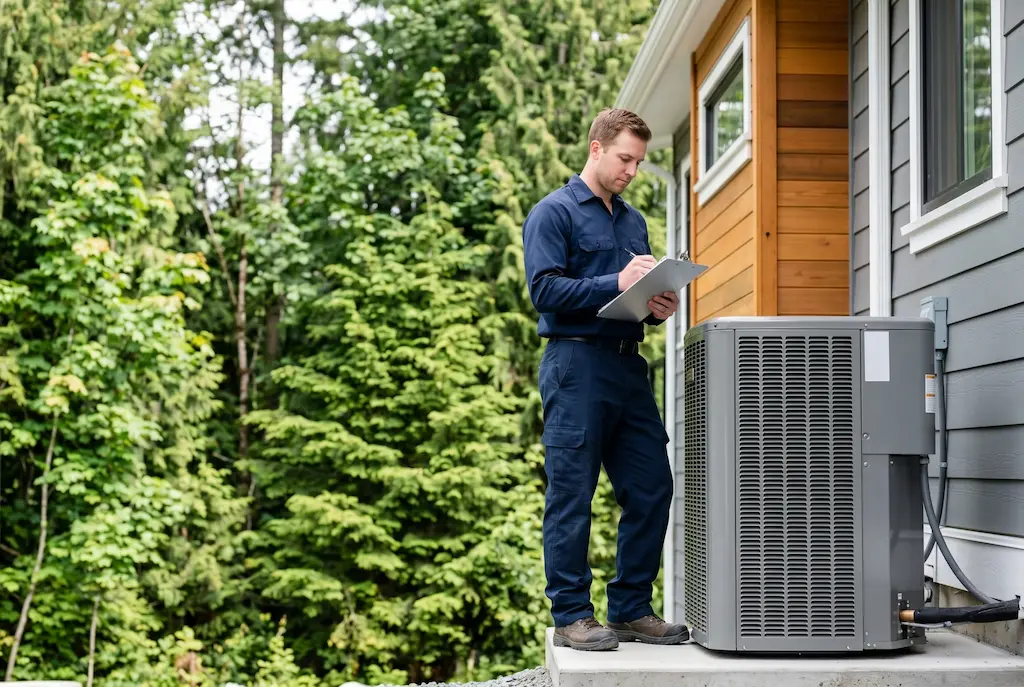
If you're trying to figure out whether to replace your furnace with a heat pump, stick with gas and add AC, or do some mix of the two, you're not alone. It's the most common question we get this time of year. The answer depends on your house, your existing equipment, your budget, and how long you plan to stay.
Three real options sit on the table right now for most Lower Mainland homes. Keep the gas furnace and add a central AC unit. Replace everything with a heat pump that handles both heating and cooling. Or install a hybrid setup where a heat pump does most of the work and a gas furnace kicks in on the coldest nights.
Here's what each option actually costs installed in Metro Vancouver in 2026, what rebates may apply, and which setup fits your home.
All three options work well when installed correctly, and each one is the right answer for a different kind of homeowner.
A gas furnace paired with central AC is the most proven, simplest combination. Installed cost ranges from $11,000 to $18,000 depending on equipment, efficiency rating, and what your home needs before installation. The technology has been refined over decades, repairs are straightforward, and you get strong fast heat in winter with reliable cooling in summer. No dependency on the electrical grid for your primary heat source.
A heat pump replaces both systems with one piece of equipment and cuts ongoing energy costs by 30 to 50 percent compared to gas. Installed cost ranges from $6,000 to $18,000, and provincial rebates through programs like CleanBC and FortisBC can significantly reduce the out-of-pocket cost depending on your situation. Best fit if your furnace is due for replacement anyway or you want to reduce your reliance on natural gas.
A dual fuel hybrid gives you both: a heat pump handles 85 to 95 percent of the year, a gas furnace takes over on the coldest nights. Installed cost ranges from $10,000 to $22,000. Best fit for homes at higher elevation or homeowners who want energy savings with gas as a fallback.
The range on all of these is wide because every home is different. Electrical panel capacity, ductwork condition, gas line sizing, outdoor unit placement, and the specific equipment you choose all move the price. The only way to narrow it down is a site visit. The sections below break down what drives each choice.
A modern high-efficiency gas furnace paired with a properly sized central air conditioning unit is a combination that has been refined over 50 years. It is simple, it is reliable, and when something does go wrong, the fix is almost always fast and affordable.
Gas furnaces produce strong, consistent heat that feels noticeably warmer than heat pump air coming out of the registers. In a Vancouver winter, when you walk in from the rain and crank the thermostat, you want heat fast. A gas furnace delivers that. Central AC then uses the same ductwork and blower to cool the home in summer, so you are getting year-round comfort from two pieces of equipment that share most of the infrastructure.
What it costs: AC on its own ranges from $6,500 to $12,000 installed, covered in detail in our AC installation cost guide for Vancouver. If you are also replacing the furnace at the same time, combined installs generally run $11,000 to $18,000 depending on efficiency rating, BTU capacity, electrical work, and ductwork condition.
What you get:
Rebates available:
When this is the right answer:
When this is not the right answer:
The one trap to avoid: paying for an AC install when your furnace is 12+ years old and going to need replacement within a couple of years anyway. Two separate installations means two sets of labour, two permit runs, and two rounds of ductwork assessment. If the furnace is on borrowed time, combining the decisions saves money.
A heat pump replaces both your furnace and your AC with one piece of equipment that handles heating and cooling. It runs on electricity, moves heat rather than generating it, and is roughly 3 times more efficient than a gas furnace or electric baseboards.
In BC's mild climate, a properly sized cold-climate heat pump handles the vast majority of annual heating without backup. Homeowners who switch from gas often see heating costs drop 30 to 60 percent. The trade-off is that the equipment is more complex, the air coming out of the registers feels cooler than gas heat, and on the rare days when Lower Mainland temperatures drop below -10°C, electric resistance backup kicks in and your electricity bill climbs for those days.
What it costs:
The range is wide because every home is different. A straightforward swap in a home with modern wiring and good ductwork lands at the lower end. A home that needs a panel upgrade, new ductwork, or a complex multi-zone setup lands at the upper end. The only way to get a real number is a free in-home estimate.
Rebates: Provincial and utility rebate programs through CleanBC, BC Hydro, and FortisBC can significantly reduce the installed cost of a heat pump. Rebate amounts vary based on your current heating system, household income, and home value. Some homeowners qualify for rebates that cover the majority of the project cost. The federal Canada Greener Homes Grant closed to new applications in January 2026, so if a contractor or blog post is still referencing that program, they are out of date. During your free in-home estimate, we walk through which rebates apply to your situation and handle the paperwork.
Important: Most rebate programs require you to pre-register and receive an eligibility code before any work begins. Homeowners who install first and apply after are automatically disqualified. This is the single most common rebate mistake we see. As Home Performance Contractor Network members, we handle this step before anything gets ordered or installed.
When this is the right answer:
When this is not the right answer:
The hybrid setup pairs an electric heat pump with a high-efficiency gas furnace. The heat pump handles 85 to 95 percent of the year, when electricity is cheaper and more efficient than gas. On the coldest nights, the gas furnace takes over automatically and delivers the strong, fast heat that gas does well.
This is the option most homeowners don't know exists, and it is a smart middle ground. You get the energy savings of a heat pump most of the time, with the reliability and comfort of gas heat as a fallback. It is particularly well-suited for homes at higher elevation in North Vancouver, Port Moody, and Maple Ridge, where winter temperatures run colder than in the city.
What it costs: $10,000 to $22,000 installed. The range depends on whether you are adding both pieces from scratch or replacing an existing furnace while adding the heat pump, plus your home's electrical and ductwork situation.
Rebates: FortisBC and provincial programs have offered rebates for dual fuel installations in the past, and program availability changes regularly. We check current eligibility during every estimate so you know exactly what applies before committing.
When this is the right answer:
When this is not the right answer:
For a typical Lower Mainland home currently heated with a gas furnace that is nearing end of life:
Scenario A: Replace furnace, add central AC
Scenario B: Full heat pump replacement (qualifies for provincial rebates)
Scenario C: Full heat pump replacement (no rebate qualification)
Scenario D: Dual fuel hybrid
The ranges are wide on purpose. Every home is different, and the only way to get an accurate number is a site visit where we evaluate your specific situation. Book a free estimate and we will narrow it down for you.
Scenario A is the simplest and most predictable. Scenario B is the cheapest long-term path if you qualify for rebates. Scenario C is the middle ground. Scenario D gives you both reliability and energy savings, but at the highest install complexity.
Whichever option you choose, sizing is where most HVAC jobs go sideways. An undersized heat pump can't keep up in January. An oversized central AC short-cycles and leaves your home clammy. An oversized gas furnace heats fast and then sits idle while temperatures swing.
Proper sizing comes from an experienced technician evaluating your home in person. Square footage, insulation, window orientation, ceiling height, and how much direct sun your home gets all factor into the right unit size. A south-facing home in Richmond with floor-to-ceiling windows has a completely different heating and cooling load than a shaded north-facing home in Burnaby, even at identical square footage.
If a contractor quotes you a tonnage over the phone without visiting your home, get another opinion. We do free in-home estimates on every installation, regardless of which system you're considering. Our technicians have been sizing systems across the Lower Mainland for over 20 years.
Most of the real decision is not about the equipment. It is about three things:
1. How long are you staying? If you're in this house for 10+ years and energy costs matter, heat pump payback starts to make sense. If you're selling within 3 years or want the most reliable system with the least hassle, furnace plus AC is usually the right call.
2. What do you value more: reliability or energy savings? A gas furnace plus AC is more reliable, easier to service, and produces warmer-feeling heat. A heat pump costs less to run but is more complex equipment. Neither answer is wrong. The right answer depends on your priorities.
3. What rebates do you actually qualify for? Provincial programs can dramatically change the math on a heat pump installation. If you qualify, a heat pump swap can be genuinely cheaper than furnace plus AC once the rebate clears. If you don't, furnace plus AC is often the better economic decision in the short term. We sort this out during your free estimate so you're comparing real numbers, not sticker prices.
1. Are you an HPCN member? Only Home Performance Contractor Network members can unlock provincial heat pump rebates. If a contractor is not in the HPCN, you may be disqualified from rebates regardless of the equipment. We are an HPCN member, so our heat pump installs qualify automatically.
2. Did you do a free in-home estimate? No contractor should be giving you a final number without physically visiting your home and evaluating your existing equipment, electrical panel, ductwork, and outdoor unit placement. If someone quotes you over the phone, they are guessing. We do free in-home estimates on every installation.
3. Will you quote me on more than one option? A contractor who only pushes heat pumps, or only pushes gas furnaces, has a preferred product. A contractor who will quote you on both and walk through the trade-offs is giving you information you can actually make a decision on.
Yes. Modern cold-climate heat pumps operate efficiently in the Lower Mainland's winter conditions. Metro Vancouver rarely sees temperatures below -5°C, and when it does, it's usually for short stretches. Most current heat pumps maintain full heating capacity down to -15°C or lower. The electric resistance backup only kicks in during extreme cold events, which happen a handful of times per winter at most.
Usually yes, but not always. Heat pumps are roughly 3 times more efficient than gas furnaces, which means lower energy consumption. Whether that translates to lower bills depends on BC Hydro rates versus FortisBC natural gas rates in any given year. For most Lower Mainland homeowners in 2026, heat pumps reduce annual heating costs by 30 to 50 percent. Homes with very low gas rates or very high electricity rates will see smaller savings.
Gas furnaces typically last 15 to 20 years with proper maintenance. Heat pumps last 12 to 15 years, with some high-end units reaching 20. The shorter lifespan is one of the trade-offs for the energy savings. A furnace has fewer moving parts and simpler controls, which translates to longer service life.
Yes, if your furnace is relatively new and in good condition. Central AC uses the same ductwork and blower as your furnace, so the two systems integrate cleanly. The AC unit connects to your existing setup with refrigerant lines, electrical, and a thermostat upgrade. Full details on pricing and what affects the cost are in our AC installation cost guide for Vancouver.
Yes. Provincial and utility programs through CleanBC, BC Hydro, and FortisBC offer rebates for qualifying heat pump installations. Amounts vary based on your current heating system, household income, and home value. The federal Canada Greener Homes Grant closed in January 2026 and is no longer available. We check your rebate eligibility during every free estimate and handle the paperwork and pre-registration requirements.
A ducted heat pump ties into your home's existing ductwork and replaces your furnace, using one outdoor unit and one indoor air handler to heat and cool the whole house. A ductless mini-split uses one outdoor unit connected to multiple indoor heads mounted on walls or ceilings in individual rooms. Ductless is the right choice for homes without existing ductwork (like homes with boiler-based heating) or when you want independent zoning. Ducted is the right choice when you already have ductwork in good condition.
Yes, this is the dual fuel hybrid setup described above. Many homeowners who want to reduce energy costs but still want gas heat for the coldest nights or during power outages choose this route. The trade-off is that you may not qualify for the full provincial fuel-switching rebates, which typically require fully displacing gas.
We install central AC, heat pumps, gas furnaces, and dual fuel systems across the Lower Mainland and have been doing it for over 20 years. As Home Performance Contractor Network members, Technical Safety BC licensed gas fitters, and certified Trane dealers, every quote includes proper permits and written warranty terms.
If you're not sure which direction makes sense, we walk through your furnace condition, your electrical panel, your ductwork, your rebate eligibility, and your long-term plans. Then we quote the options that actually fit your home so you can compare apples to apples. Some homeowners land on furnace plus AC. Some go heat pump. Some go hybrid. Our job is to give you the information to pick the right one for your situation.
Estimates are free, in-home, and no-pressure. We serve homeowners across Vancouver, Burnaby, Surrey, Coquitlam, North Vancouver, Richmond, Port Moody, Maple Ridge, and across Metro Vancouver.
Book a free HVAC estimate or call us at (604) 535-8434.
See what our customers have to say
Simply complete our form to make an appointment. A member of our team will be in touch to confirm your appointment.