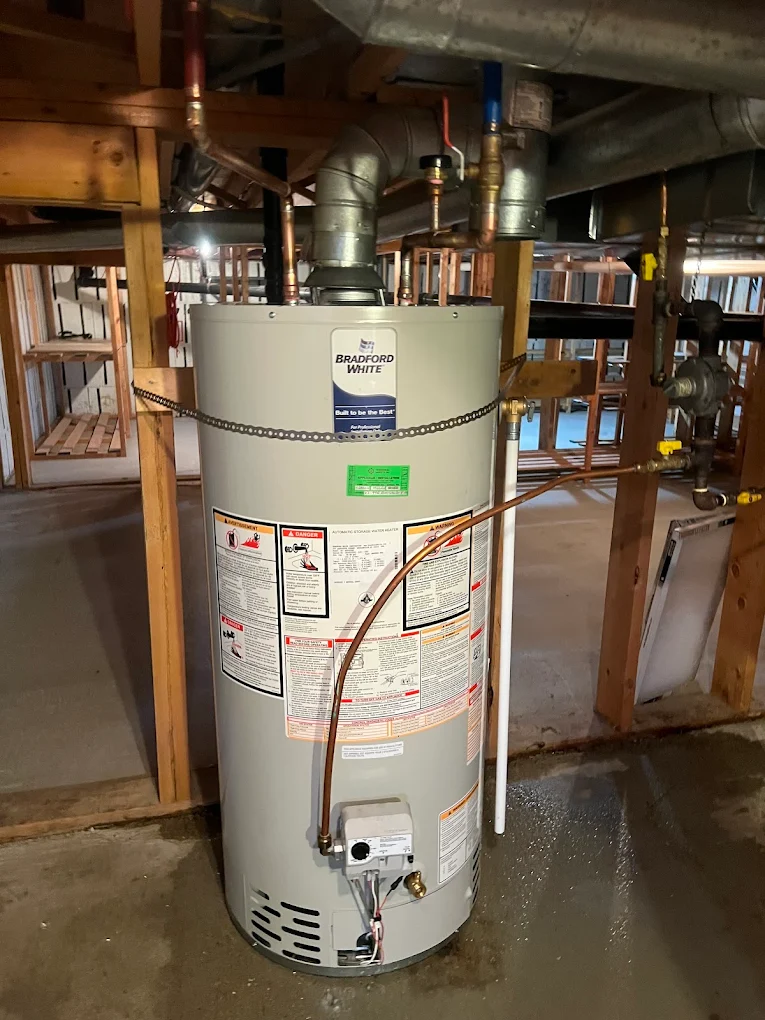
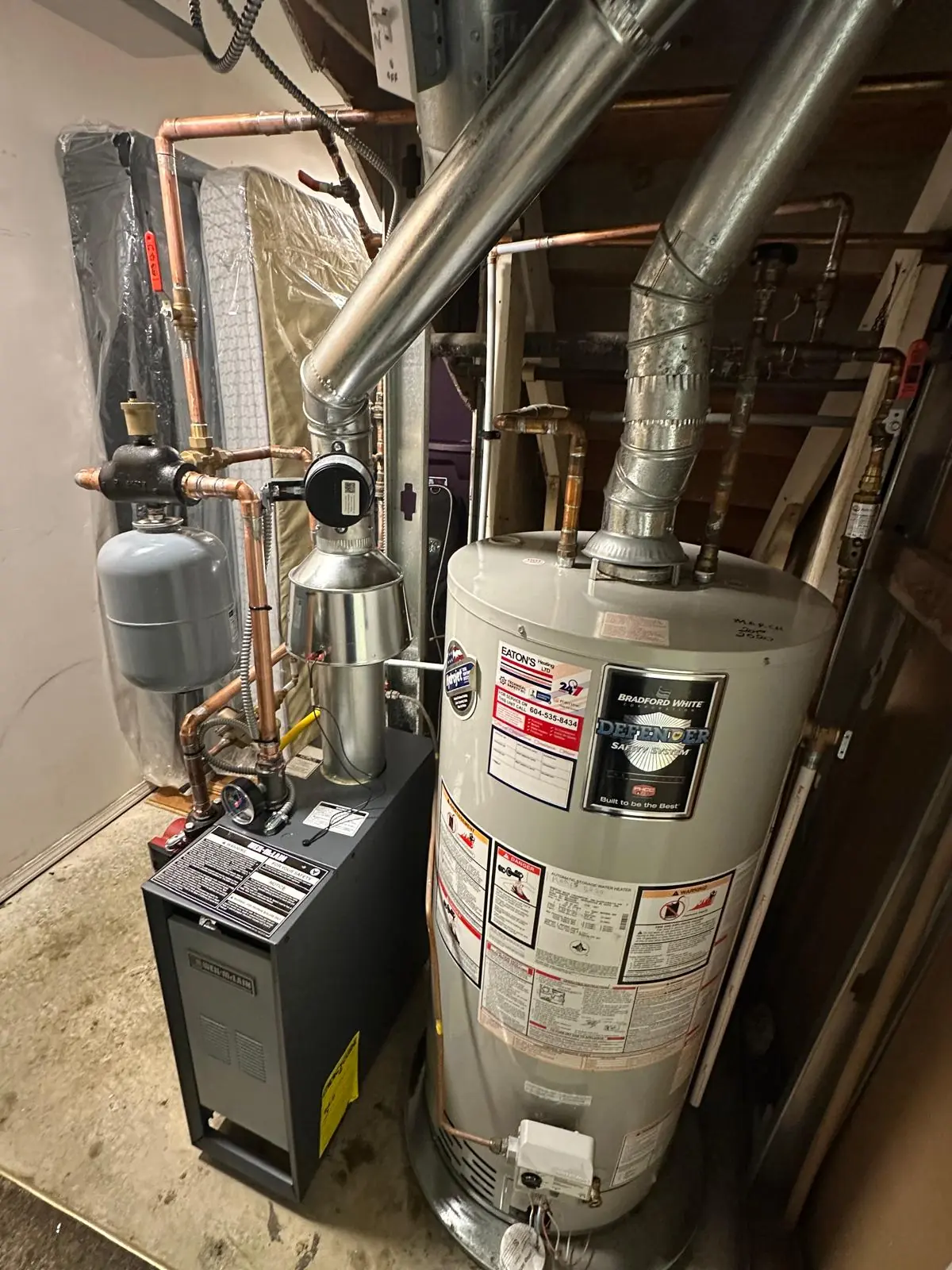
Free Estimate Hot Water Tank Replacement in West Vancouver
A hot water tank that has started leaking from the bottom is a replacement, not a repair, and in West Vancouver we do those with Bradford White, John Wood, and Rheem tanks, often the same day you call. A tank that has not leaked yet, one giving lukewarm water, rusty water, or a pilot that will not stay lit, is sometimes repairable, and we tell you which is which. The estimate is free, the price is fixed before anything is ordered, and the new tank comes with the venting, the gas fitting, the removal of the old unit, and parts and labour covered. Our gas fitters are TSBC licensed and have been replacing tanks across Ambleside, Dundarave, Cedardale, the British Properties, and Caulfeild for 20-plus years. Zero percent financing over 12 months is available through Financeit.


See what our customers have to say
Brands Serviced
Years of Experience
Homes Served and Counting
West Vancouver houses are built into the hill, and that puts the hot water tank in one of two places. In the older homes in the British Properties, Cedardale, and Caulfeild it sits in a mechanical room against the uphill foundation wall, beside the furnace or boiler, venting up through the same masonry chimney. In the split-levels and the homes built after 1980 it is more often in a garage-level utility room with an outside wall a few feet away. That difference decides which tank goes back in. A tank on the chimney is usually replaced with the same atmospheric vent type, which vents by natural draft. A tank near an outside wall can take a power vent model, which uses a small fan to push the exhaust out a sidewall pipe and does not need the chimney at all. The right answer changes from one street to the next, so we confirm the venting on every replacement.
The Ambleside and Dundarave bungalows bring a different situation. Many of them had a high-efficiency furnace put in over the last fifteen years, and the new furnace vents out the side of the house in plastic pipe instead of up the chimney. That leaves the hot water tank alone in a chimney built for two appliances. The flue is now too big and too cold for one small tank, and the exhaust does not draw the way it did when two appliances were warming the chimney. On a hot water tank replacement in one of these homes we size the chimney connector to the new tank, or switch to a power vent model so the chimney is no longer used, and either one solves it for good. If the furnace is also due, doing both at once is worth asking about on our furnace replacement page.
A replacement runs $2,200 to $2,600 installed for most West Vancouver homes. That is the whole job: the old tank drained, disconnected, and taken away, the new Bradford White, John Wood, or Rheem tank set and levelled, new water connections and gas fitting, the vent connected to the chimney or a new power vent run to the outside wall, an expansion tank added where the house has a pressure reducing valve, the permit, and the tank fired and checked. The estimate is free and the price on it is the price you pay. Eaton's Heating is TSBC licensed (LGA0200006), a Home Performance Contractor Network member, and holds a 4.9 rating across 500-plus Google reviews.
Some tank problems are repairs, and we say so when they are. A pilot that will not stay lit is usually a thermocouple. No hot water with the pilot lit is often the gas control valve. A relief valve that drips is the valve, or the house pressure, not the tank. Those get fixed on the spot with OEM parts and six months warranty on parts and labour. What does not get repaired is water coming from the tank itself, because the steel has rusted through and there is no part for that. Homeowners in the larger British Properties houses, where a 50-gallon tank runs out before the third shower, sometimes ask about going the other way, and our tankless water heater in West Vancouver page covers what that involves.

Most of the tanks we take out of West Vancouver homes are atmospheric vent, the plain type with a draft hood on top that vents by hot air rising into the chimney. They are simple, quiet, and cheaper, and where the chimney is in good shape and the tank is the only appliance still using it, or the furnace is an older type still venting there too, the same kind goes back in. The connector gets sized to the new tank and the draft is checked with the tank running before we leave. In the British Properties and Caulfeild homes where the furnace or boiler still shares the chimney, that is nearly always the answer.
A power vent tank is the answer when the chimney is gone, blocked, oversized for one appliance, or on the other side of the house. It vents through a plastic pipe to any outside wall within reach, which suits the garage-level utility rooms in the split-levels and the Ambleside homes where the furnace no longer uses the chimney. It costs more, needs an electrical outlet, and the fan makes a low hum when the tank is heating. It also frees up the tank's location, so a tank that has always been in an awkward corner can move. We price both when both are possible and tell you which we would put in our own house.
Licensed Gas Contractor (LGA0200006)
Authorized Dealer and Installer
Certified Fireplace Dealer
Have a question about your HVAC system? Book an appointment using the form below, or call (604) 535-8434 for immediate help.
$2,200 to $2,600 installed for most homes, whether the tank is 40 or 50 gallons and whether it is a Bradford White, John Wood, or Rheem. That includes removal of the old tank, the new tank, water and gas connections, venting, the expansion tank where one is needed, the permit, and parts and labour. A power vent model sits toward the top of the range or a little above it, and moving the tank to a new location adds to that. The estimate is free and fixed before anything is ordered. Zero percent financing over 12 months is available through Financeit.
It depends where the water is coming from. A drip from the relief valve on the side, the drain valve near the bottom, or a fitting on top is a repair. Water on the floor with no obvious source, or a wet seam on the tank itself, means the inner steel has rusted through, and that tank is replaced. If it is leaking now, shut off the cold water valve above the tank and the gas valve on the gas line, and call. In the British Properties homes where the tank is in a finished lower level, we treat a leaking tank as the first job of the day.
A 40-gallon tank suits a couple or a small family. A 50-gallon tank suits most three and four bedroom homes. The large British Properties, Whitby Estates, and Caulfeild houses with four or five bathrooms, a soaker tub, and a second kitchen downstairs are where a 50-gallon tank runs out, and for those we look at a high-recovery power vent model or a tankless unit rather than a bigger tank, which is heavier, slower to heat, and often does not fit the room. We size from the house and the household, not from a chart. The neighbourhoods where this comes up most are the ones our West Vancouver HVAC services page covers for boilers, since the biggest houses are the boiler houses.
Sometimes. A tankless unit gives endless hot water and takes up a fraction of the space, but it costs more to install, needs a larger gas line in many older West Vancouver homes, and needs an outside wall for its vent. A tank is cheaper, simpler, and fine for most households. If your tank is leaking today and you need hot water tonight, a tank is the answer, since a tankless install takes longer to plan. Everything we do with both types is on our hot water heaters page.
FortisBC has offered rebates on certain high-efficiency gas water heaters, with larger amounts for condensing models than for standard tanks. Programs and amounts change, so we do not promise a figure. As a FortisBC Trade Ally we confirm what your home qualifies for during the estimate, and current programs are listed on our BC rebates page.
Because most West Vancouver homes have a pressure reducing valve where the water enters the house, and that valve closes the plumbing off from the street. When the tank heats water, the water expands, and with nowhere to go the pressure inside the pipes climbs until the relief valve on the tank opens and drips. An expansion tank is a small bladder tank on the cold line that absorbs that expansion. The plumbing code requires one where a pressure reducing valve is present, and it protects the new tank, the relief valve, and every tap and toilet fill valve in the house. If your old tank's relief valve dripped, this is usually why.
Simply complete our form to make an appointment. A member of our team will be in touch to confirm your appointment.