Same-Day Hot Water Tank Replacement Across the North Shore
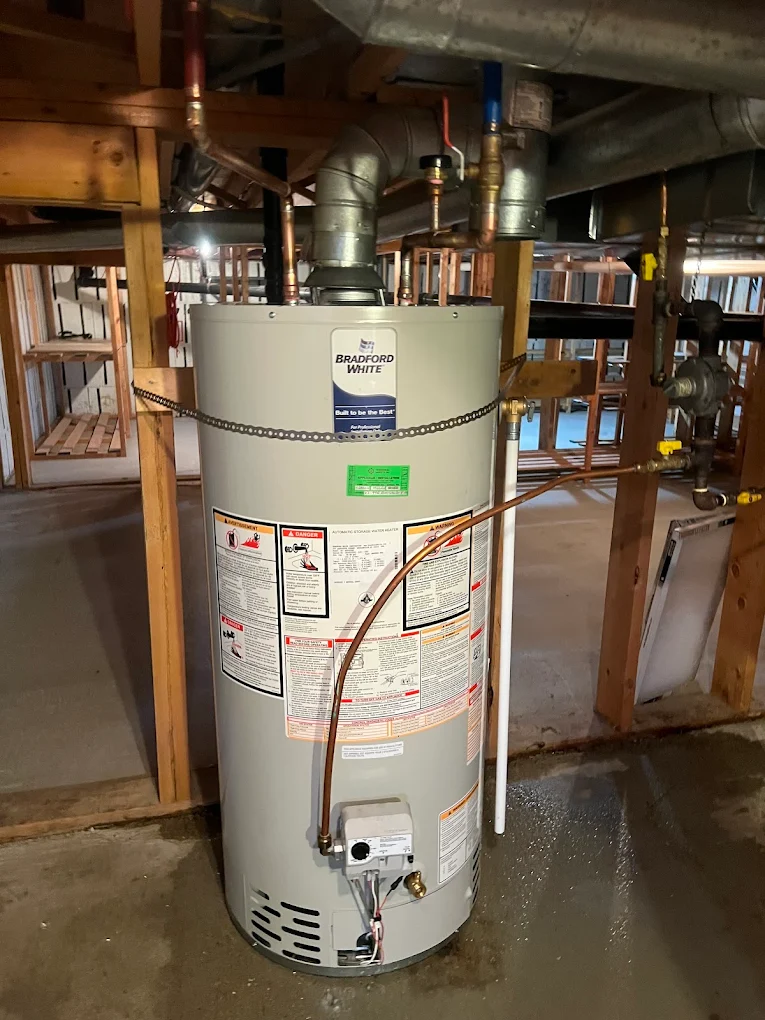
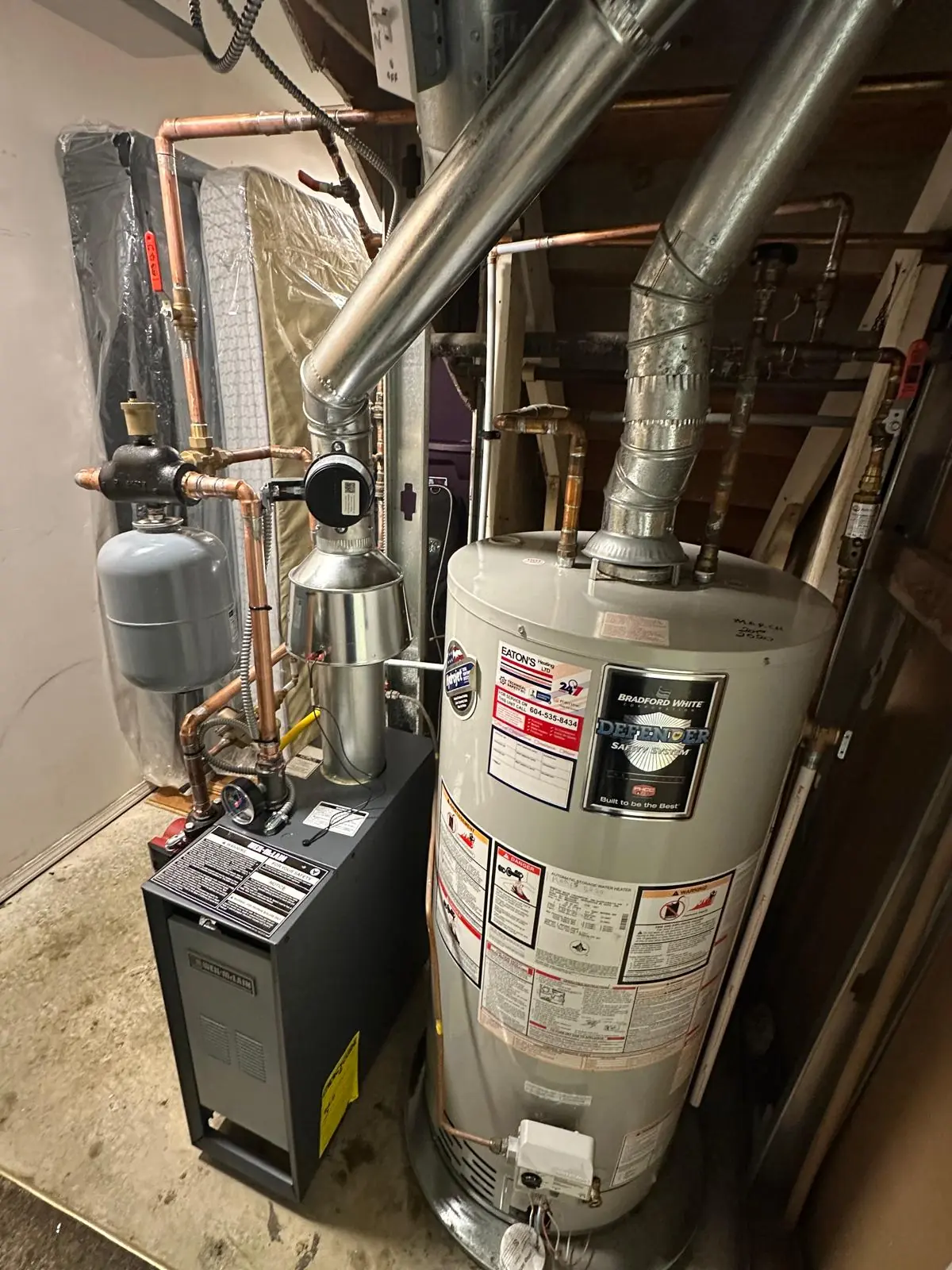
When a hot water tank fails in a single-storey home, the water pools in the utility room. When a hot water tank fails in a three-level North Vancouver split-level with the mechanical room on the lowest floor, the damage stays contained to that level. But when the tank sits on a mid-level in a hillside home and the failure happens overnight, water can travel through floor assemblies and stairwells into rooms below before anyone notices. North Vancouver's multi-level housing stock raises the stakes on tank failures in ways that flat-lot homes in other cities do not face. Eaton's Heating provides same-day hot water tank replacement across all North Vancouver neighbourhoods. We install Bradford White, John Wood, and Rheem tanks properly sized to your household's demand. Every call starts with a $169 diagnostic to confirm the issue before we recommend replacement.


See what our customers have to say
Brands Serviced
Years of Experience
Homes Served and Counting
The water damage risk from a failing hot water tank depends on where the tank sits relative to the rest of the home, and North Vancouver's housing stock puts tanks in configurations that amplify that risk. A Lynn Valley split-level from the 1960s with the tank in a lower-level utility room contains the damage to one level. A Pemberton Heights home built into a slope with the mechanical room on a mid-level above a walk-out basement has water that travels downhill through flooring and walls. A Norgate rancher with the tank at grade level and no basement below it faces the least risk but still loses hot water until the tank is replaced. We treat every tank failure on the North Shore as urgent because we see the damage scenarios that delay causes in these multi-level homes.
The North Shore's housing age means most neighbourhoods are cycling through tanks on a predictable timeline. Norgate's post-war homes from the late 1940s and 1950s are on their fourth or fifth tank. Lynn Valley and Capilano homes built in the 1960s and 1970s are typically on their third or fourth. Delbrook and Upper Lonsdale homes from the same era follow a similar pattern. Each time a tank is replaced, the surrounding infrastructure matters: shut-off valves corrode and may need replacement, gas flex connectors may not meet current code, and vent connections can deteriorate between tank installations. Lower Lonsdale's older character homes sometimes have tanks in tight utility closets where access and vent routing add complexity. Grouse Woods and Blueridge homes from the 1990s and 2000s have tanks approaching or entering the 8 to 12 year failure window for the first time. North Vancouver's damp climate and the moisture that saturates mechanical rooms on the North Shore may accelerate internal tank corrosion, pushing lifespan toward the lower end of that range.
The failure itself follows the same pattern regardless of the neighbourhood. The anode rod inside the tank, a sacrificial component designed to corrode before the tank does, eventually dissolves completely. Once that protection is gone, the steel shell rusts from inside. Sediment from minerals in Metro Vancouver's water settles at the bottom, insulating the water from the burner and causing overheating that weakens the tank wall further. By the time rusty water, rumbling sounds, or a puddle appears, the tank has already failed internally. Repair is not practical when the shell is compromised. The only option is replacement.
Eaton's Heating replaces hot water tanks across the North Shore with Bradford White, John Wood, and Rheem in both atmospheric vent and power vent configurations. Atmospheric vent models connect to an existing B-vent chimney and are the most common configuration in North Vancouver's older homes. Power vent models exhaust through a sidewall using a blower motor and PVC piping, used where the existing vent path is not suitable. Correct tank sizing for a North Vancouver home depends on the household's peak demand rather than a one-size approach. A couple in a Lower Lonsdale condo has fundamentally different hot water needs than a family of five in a Lynn Valley home with three bathrooms. We size based on fixture count, simultaneous usage patterns, and the distance from the tank to the farthest fixture, which in multi-level North Shore homes can be significant.
Every credential matters when gas and water are involved. Eaton's Heating is Technical Safety BC licensed under LGA0200006, holds FortisBC Trade Ally status and BBB A+ accreditation, and is Home Performance Contractor Network (HPCN) registered. Our team carries full WorkSafeBC coverage. Our 400+ five-star Google reviews and 4.9 average rating reflect replacements where the gas connections, shut-off valves, relief valve piping, and venting all meet current code, not just the connections that were there before.
The replacement process starts with draining and disconnecting the failed tank and removing it from the home, which in hillside North Vancouver homes may mean navigating stairs or narrow access paths that flat-lot homes do not present. We install the new tank, connect water supply and gas lines, verify the vent path and connections, install and test the temperature and pressure relief valve with discharge piping routed to code, and confirm full heating performance before leaving. The old tank is disposed of as part of the service. For homeowners interested in switching to a continuous on-demand system, we also service and install tankless water heaters from Navien and Rinnai. We service furnaces, boilers, and all other HVAC systems across North Vancouver.

A tank failure in a finished basement is a race against water damage, and on the North Shore that race is complicated by the multi-level homes that define much of the housing stock. In Lynn Valley, Capilano, and Edgemont, many homes have the tank in a lower-level mechanical room with finished living space on the same floor or below. In Deep Cove and Dollarton, some homes have mechanical rooms on mid-levels with walk-out basements beneath. Our Coquitlam base connects to the North Shore via Highway 1 and the Ironworkers Memorial Bridge, reaching most neighbourhoods in 20 to 25 minutes. We carry common tank sizes so same-day replacement does not require a return trip.
North Vancouver homeowners should check the area around their tank periodically for moisture, rust stains, or mineral deposits, and note the manufacture date on the label. Proactive replacement before failure eliminates the water damage risk entirely. Visit our rebates page for information on any active incentive programs.
Licensed Gas Contractor (LGA0200006)
Authorized Dealer and Installer
Certified Fireplace Dealer
Have a question about your HVAC system? Book an appointment using the form below, or call (604) 535-8434 for immediate help.
Yes. Our Coquitlam base connects to the North Shore via Highway 1 and the Ironworkers Memorial Bridge, reaching most neighbourhoods in 20 to 25 minutes. We carry common tank sizes and treat every tank failure as urgent because of the water damage risk in North Vancouver's multi-level homes. Most replacements are completed within a few hours of arrival. Call (604) 535-8434.
Replacement on the North Shore runs $2,200 to $2,600 installed. That covers the new tank, all water and gas connections, temperature and pressure relief valve piping to code, venting verification, removal and disposal of the old unit, and confirmation that the system is heating correctly. Tank size (40 to 75 gallons) and vent type (atmospheric or power vent) affect where the cost falls within that range. Homes where the old tank is accessed through narrow hallways or staircases add modest time but do not change the price. We quote the full cost before starting.
The manufacture date is printed on the rating plate label attached to the tank, usually near the top. Most manufacturers print the date directly. Some encode it in the serial number, where the first two or four digits represent the year and month. If the tank is approaching 8 to 10 years old and you have not noticed any symptoms yet, scheduling a proactive replacement before it fails eliminates the water damage risk. We can verify tank age and condition during the $169 diagnostic.
Yes, and it is the smartest approach for North Vancouver homeowners with tanks in finished basements or on upper levels of multi-storey homes. A planned replacement on your schedule avoids the emergency, the water damage, and the insurance claim. If the tank is 8 to 10 years old and has not been replaced, the internal corrosion is well underway even if no external symptoms are visible yet. We replace tanks proactively and the process is the same as an emergency replacement: we drain the old unit, remove it, install the new one, and confirm everything is working correctly. The only difference is you choose the timing instead of the tank choosing it for you.
An atmospheric vent tank relies on natural convection to draw combustion gases up through a metal B-vent chimney to the roof. This is the most common configuration in North Vancouver's older homes and is typically a direct swap when replacing an existing atmospheric vent unit. A power vent tank uses a small electric blower motor to push exhaust through PVC piping that can exit horizontally through a sidewall rather than vertically through a chimney. Power vent is used when the existing chimney is no longer serviceable, when the tank location does not allow a vertical vent run, or when a high-efficiency furnace conversion has already claimed the old chimney for its own PVC exhaust. Power vent models cost slightly more due to the blower and the PVC venting material.
That depends on your household's hot water volume, your tolerance for the higher upfront cost, and whether the existing gas line and venting can support a tankless unit without major upgrades. Tankless systems heat water on demand rather than storing it, which means they never run out and use less gas over time. But the installation cost is significantly higher than a tank replacement, and many North Vancouver homes require gas line and venting modifications to accommodate the higher BTU input that tankless units need. For most households, a properly sized tank at $2,200 to $2,600 is the practical and affordable choice. Tankless makes the strongest case in homes with very high simultaneous demand or where reclaiming the floor space a tank occupies is a priority. We walk through the comparison during the service call. Learn more about tankless water heater service.
Simply complete our form to make an appointment. A member of our team will be in touch to confirm your appointment.